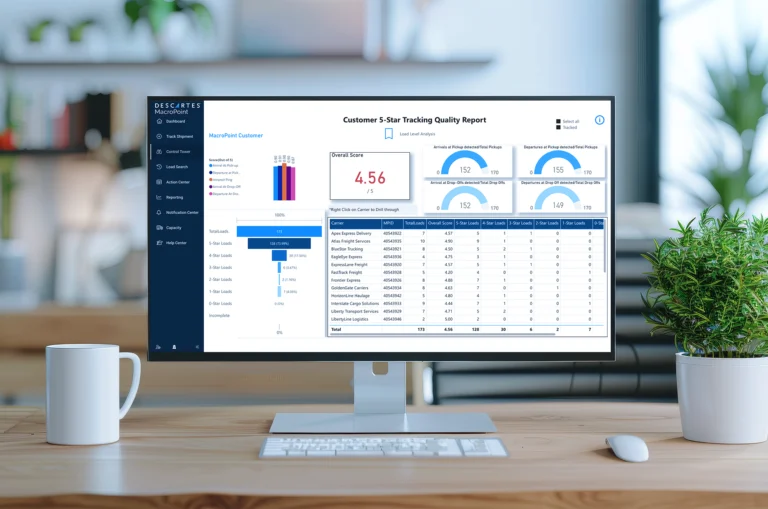
Operating in Today’s Market Requires More Discipline
Across sessions and conversations at TIA Capital Ideas 2026, a clear pattern emerged: the expectations placed on transportation teams continue to rise.
The tone was grounded and realistic, as many organizations have worked through a prolonged period of soft rates and excess capacity, and while there are signs of improvement, the focus has shifted toward how to operate more effectively in the current environment. Service expectations remain high, margins remain tight, and performance is being scrutinized more closely than ever. These themes were constantly reinforced, such as during the conference’s economic update, where Donald Broughton pointed to a market showing signs of stabilization—but still requiring careful interpretation. Freight demand doesn’t always align with broader economic indicators, making disciplined cost, capacity, and execution management critical.
What stood out is that success is no longer tied to how much volume you can move, but how consistently you can execute. Transportation teams are being asked to deliver reliability, transparency, and responsiveness without adding unnecessary cost or complexity.
In this environment, success is less about reacting faster and more about operating with consistency, control, and clarity across the entire transportation lifecycle network.
Fraud Is Reshaping How Transportation Operates
Freight fraud and strategic cargo theft were not just topics of discussion—they were central to the most attended sessions and conversations throughout the event.
What’s changing is not just the scale of fraud, but how organizations are being forced to respond to it. The traditional approach that treats fraud as a one-time onboarding or compliance check is no longer sufficient. Instead, there is growing recognition that fraud must be managed across the entire lifecycle of a shipment.
That includes:
- Carrier vetting before tender
- Verification at the time of booking
- Monitoring and validation during transit
- Post-load documentation and data integrity
During the Descartes-led fireside session, this idea was reinforced through practical examples. Risk doesn’t only exist in a single moment—it evolves as a load moves. That reality is pushing organizations to adopt more continuous, connected approaches to fraud prevention.
This is where Descartes’ perspective resonated strongly. Rather than treating fraud technology as a point solution, the focus is on connecting pre-tender intelligence with in-transit visibility and monitoring, creating a more complete and actionable view of risk across every shipment.
Visibility Has Become the Backbone of Execution
Visibility has been a consistent theme at industry events for years, but at TIA Capital Ideas 2026, the conversation felt more mature.
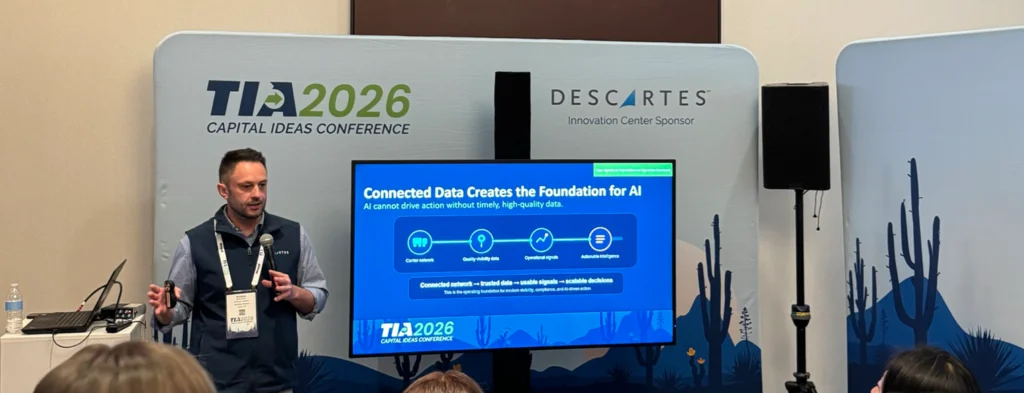
Andrew Wimer’s learning lab, “Visibility to Victory: How Agentic AI Puts Brokers on Top of the Scorecard,” reflected that shift. The focus was not on visibility as a standalone capability, but on how it enables better operational outcomes.
Teams are increasingly leveraging visibility data to:
- Improve on-time performance and reliability
- Anticipate disruptions earlier
- Communicate more proactively with customers and partners
- Manage operations through exception rather than constant manual oversight
This is where automation and AI are becoming more relevant. As discussed in the session, when repetitive tasks such as check calls, tracking updates, and status verification are automated, teams can focus on higher-value work—resolving exceptions, improving service, and strengthening relationships.
Descartes’ messaging aligned closely with this evolution, emphasizing exception management powered by a suite of AI agents as a way to translate visibility into action, not just awareness.
From Covering Loads to Delivering Strategy
Another clear shift at the conference was how transportation organizations are positioning their value.
Jason Jokerst’s session, “Sell More Than Loads, Sell Transportation Strategy,” highlighted a move away from purely transactional engagement toward a more strategic role in the supply chain.
In practice, this means organizations are being asked to:
- Provide insight, not just execution
- Help customers navigate volatility and complexity
- Deliver consistent service that supports broader business goals
- Use data and technology to inform decision-making
This shift is particularly important in an environment where margins are under pressure. Competing on price alone becomes increasingly difficult, which makes differentiation through service, reliability, and strategic value more important.
Throughout the event, this theme showed up in conversations about managed transportation, network optimization, and the growing expectation that transportation partners contribute to overall supply chain performance—not just load coverage.
Consistency Is What Makes You the Partner of Choice
If there was one idea that connected all of these themes, it was the importance of consistency.
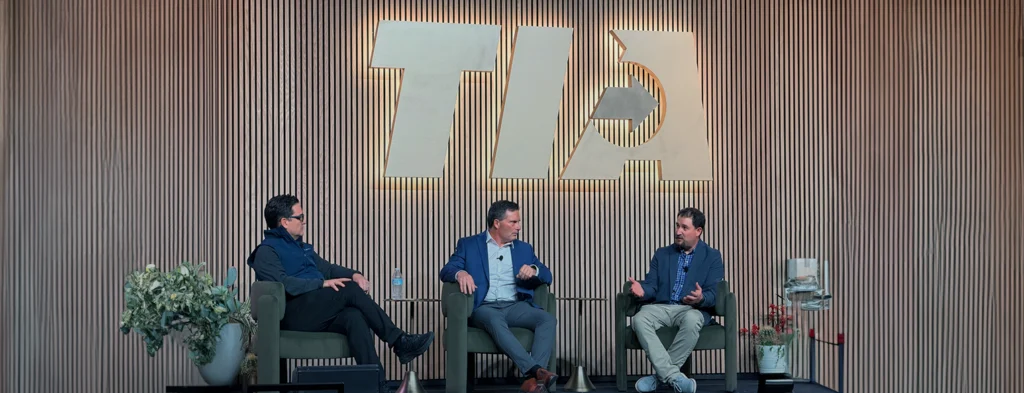
The Descartes fireside chat featuring Dan Cicerchi and leaders from Giltner Logistics brought this into focus from both the broker and carrier perspective.
Carriers today are more selective,they are not looking to work with a large number of partners; instead, they are looking for a smaller number of reliable, consistent ones. The same is true for shippers evaluating their transportation partners.
What defines those preferred relationships is not just price or availability, but execution:
- Are expectations clearly set and met?
- Is onboarding efficient and reliable?
- Is tracking consistent and accurate?
- Are issues handled proactively and professionally?
- Are payments timely and predictable?
These are operational details, but they have a significant impact on how organizations are perceived.
A key takeaway from the discussion was that organizations that can deliver this level of consistency, regardless of market conditions, are the ones most likely to build long-term, resilient partnerships.
Technology Enables Execution; It Doesn’t Replace It
One of the more balanced perspectives that emerged from the event is that technology alone is not the answer.
There is no shortage of tools available to transportation teams today, but the challenge lies in effectively technology is integrated into day-to-day operations.
As discussed during the fireside session, this is not a question of technology versus relationships. Relationships still matter and, in many cases, they are what open the door to new opportunities. Execution, however, is what sustains those relationships.
Technology plays a critical role in enabling execution by:
- Reducing manual effort through automation
- Providing real-time and predictive insights
- Supporting more consistent workflows
- Helping identify and mitigate risk
Descartes’ approach reflects this balance, focusing on connecting these capabilities into a more unified operating model rather than treating them as isolated tools.
A More Connected Approach to Transportation Management
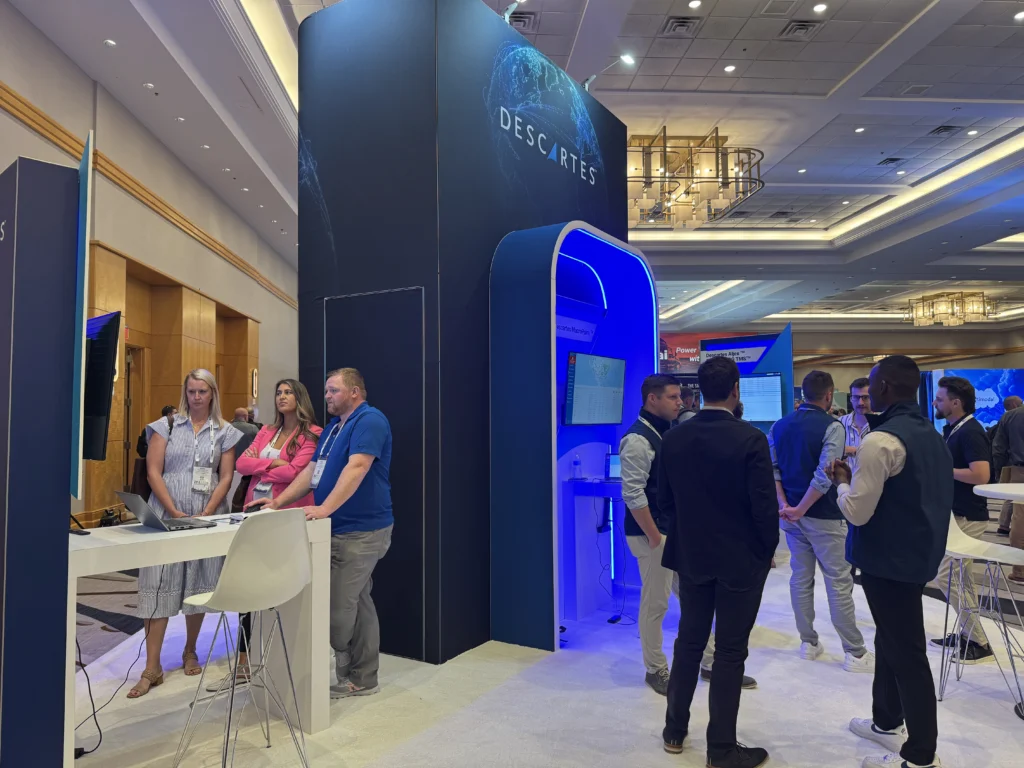
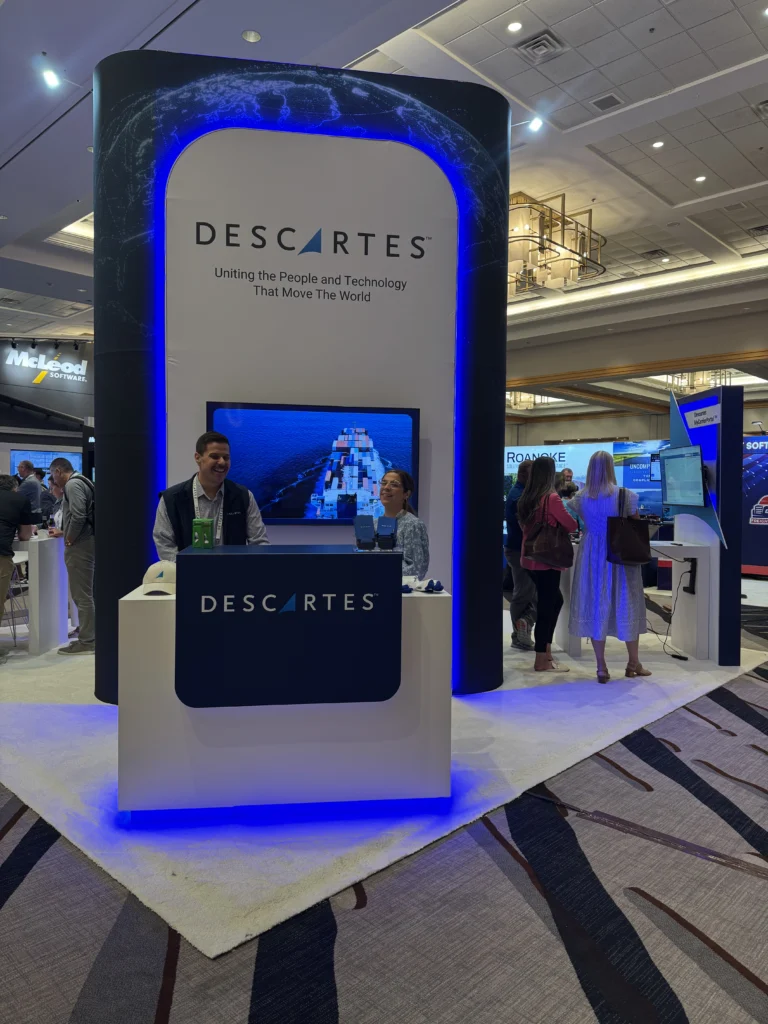
At TIA Capital Ideas, from learning labs to exhibit hall conversations to the fireside discussion, Descartes consistently reinforced the value of connected operations.
The idea is straightforward but increasingly important: transportation performance improves when key capabilities are aligned and working together.
That includes:
- Carrier compliance and vetting
- Real-time and predictive visibility
- Fraud detection and monitoring
- Transportation execution and workflow automation
Rather than managing these functions independently, organizations are looking to connect them into a more cohesive system that supports better decision-making and more consistent outcomes.
This connected approach also reflects the growing importance of data and network effects in transportation. Access to broader, more reliable data enables better insights, which in turn supports better execution.
What Transportation Teams Should Do Next
While the themes from TIA Capital Ideas 2026 were broad, the implications for transportation teams are practical.
A few clear priorities emerged:
Standardize execution across the load lifecycle
Consistency across onboarding, tracking, communication, and documentation is becoming a key differentiator.
Treat fraud as an ongoing operational discipline
Move beyond one-time checks and implement verification and monitoring throughout the shipment lifecycle.
Use visibility to manage by exception
Focus on workflows that highlight issues early and allow teams to respond efficiently, rather than relying on constant manual oversight.
Leverage automation to reduce friction
Automation should simplify operations and free up teams to focus on higher-value activities.
Focus on service quality to strengthen relationships
Reliable, consistent service builds trust—and trust is what drives long-term growth.
Final Thought
TIA Capital Ideas 2026 reflected an industry that is evolving with intention.
The challenges are clear, but so are the opportunities. Organizations that can bring together visibility, risk management, automation, and execution into a more connected approach will be better positioned to navigate what comes next.
Delivering smarter in this environment is focused on greater consistency and control in transportation management.