Air freight is one of the most popular and fastest modes of transporting goods over long distances worldwide. There has been a growing demand for shipment visibility in the air cargo industry, driven by the increasing popularity of air transportation, particularly in emerging sectors such as e-commerce, where high demand requires goods to be available promptly.
Leveraging air cargo tracking ensures timely delivery of goods, which is crucial for businesses to achieve customer satisfaction and meet supply chain demands. Because air freight is the most expensive transport mode, it is used primarily for high-value, low-volume shipments, time-sensitive cargo (such as pharmaceuticals, electronics, or perishables), or freight moved urgently due to earlier supply chain disruptions, such as when an ocean delay forces a last-minute air shipment. Visibility becomes especially critical when air cargo is used as a recovery strategy following delays or stock shortages.
This article explores five key benefits of air cargo tracking that will significantly enhance your supply chain logistics operations.
Cost Savings by Replacing Manual Tracking with Automated Data
Businesses using more traditional means of communication, via phone or email, will notice significant cost savings due to the implementation of air cargo visibility solutions. Real-time shipment visibility enables companies to streamline operations with accurate cargo tracking and air data, preventing unnecessary expenses and costly scenarios such as overstocking.
With up-to-date statuses, companies can efficiently reroute goods or adjust delivery schedules, avoiding costly penalties or rework associated with late deliveries and ensuring customer satisfaction through timely fulfillment.
In industries relying heavily on air freight, late pickups can lead to high airport storage fees. Just a few pallets left at an airport for a couple of days could generate over $55,000 in charges. Having visibility allows shippers to detect potential delays earlier and avoid these unnecessary costs.
Enhanced Decision-Making and Transparency
The data received from air cargo tracking is key to making informed decisions within logistics and supply chain management. Having access to real-time visibility insights into shipments allows companies to analyze data and adjust transportation strategies accordingly.
Tracking can become challenging when shippers depend entirely on freight forwarders, especially because airlines provide status updates at the Master Air Waybill (MAWB) level, whereas Freight Forwarders (FF) often do so on the HAWB House Air Waybill (HAWB) level. A strong visibility platform aggregates data from both the forwarder and the airline, ensuring updates remain reliable even when one data source is delayed or incomplete.
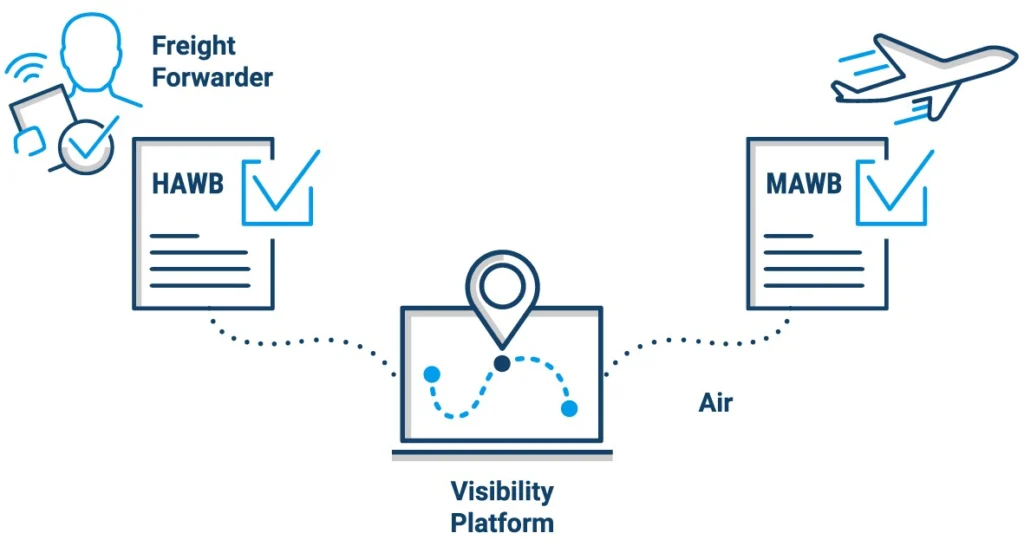
Operational adjustments are essential to strengthen customer relationships and respond to unforeseen challenges, such as adverse weather or apron congestion. Tracking insights can facilitate adjustments in delivery routes as a response to delays, while historical data analysis can identify recurring issues. Air cargo tracking brings agility to this process, enabling better decision-making, boosting efficiency, and profitability.
Optimized Supply Chain Efficiency
Air cargo tracking allows you to know exactly where your goods are, when they are arriving, and if there are any issues on the way. Having this information at your fingertips, will make the overall process shorter and more efficient. Advanced visibility solutions also compare “promised” ETAs from forwarders with the “actual” ETAs derived from airline data. As a result, delays are minimized and delivery times improved. This proactive approach reduces downtime and enhances customer satisfaction, fostering a relationship of trust and transparency with clients. This point will be explained in more detail below.
Efficient supply chain management solutions, such as Descartes MacroPoint™, provide real-time shipment visibility that strengthens operations and improves demand forecasting. Unlike most visibility providers who depend on third parties for shipment data, Descartes is one of the very few with direct connections to airlines, offering the world’s largest source of air shipment data.
Better Risk Management
While security is an important aspect of supply chain operations, in the context of air cargo visibility, it’s more accurate to focus on risk management and shipment integrity. There are different ways to track air cargo. One approach involves placing physical tracking devices on Unit Load Devices (ULDs) or pallets, providing real-time data on location and conditions, but this can be costly and is not feasible everywhere.
More commonly, companies rely on tracking data from airlines, which is generated whenever shipments are scanned during handling and transit. This type of visibility provides key status updates and helps organizations monitor progress, anticipate delays, and respond proactively to disruptions.
While such tracking might not directly prevent theft or fraud, it significantly improves situational awareness and accountability throughout the shipping process. This transparency strengthens customer trust and enhances overall risk management by reducing uncertainty, improving communication, and enabling faster resolution when issues arise.
Air cargo visibility is also essential for validating charges from freight forwarders. For example, when a freight forwarder invoices customers for airport storage fees or handling delays, shippers can compare these claims against airline-generated status updates provided through Descartes MacroPoint. This allows them to confirm whether additional costs are justified and avoid unnecessary or incorrect charges.
Increased Customer Satisfaction
One key benefit of air cargo tracking, and a primary goal in the supply chain, is boosting customer satisfaction. Today, real-time updates are virtually indispensable for supply chain planning and execution. Access to this visibility reduces uncertainty, which is especially important for sectors that depend on time-sensitive deliveries, such as pharmaceuticals, automotive, electronics, and aerospace.
By keeping customers updated, businesses manage expectations more effectively, minimize complaints, and improve the overall customer experience.
As companies expand globally, air visibility becomes even more important. It standardizes how teams across regions access shipment information, ensuring consistent processes regardless of where bookings originate.
Air cargo tracking is more than just an upgraded way to follow your shipments, it’s a strategic advantage. With air cargo tracking businesses have a smarter, more secure, and more responsive method to manage operations. With tangible benefits in performance, visibility, and customer experience, it’s a valuable investment for companies aiming to stay ahead in a competitive market.
Descartes MacroPoint air tracking solution not only provides real-time visibility into shipment status, estimated time of arrival, and locations, but also offers advanced features such as analytics, automations, and mobile accessibility.
Find out how air cargo tracking can add value to your business by getting in touch with one of our experts.