For North American (NA) shippers, it’s time to move beyond adoption and into the strategic application of automation and artificial intelligence (AI) for supply chain management.
Artificial intelligence is advancing at an exponential pace — but AI without context is just computation. The real differentiator in the next era of supply chain transformation won’t be access to models. It will be access to trusted, connected, real-world execution data.
The 9th Annual Descartes Transportation Management Benchmark Survey captures insights from transportation professionals to identify the strategies, tactics, and expectations for the industry. We’re diving into the details of the responses from NA shippers (manufacturers, retailers, and distributors) on their automation and generative AI strategies and tactics to help companies understand how these technologies are being used to achieve corporate goals.
AI in Transportation Management is Still Maturing
Transportation is now strategic, but AI-driven automation lags in some areas. A record 81% of NA shippers in the survey view transportation management as a service differentiator or competitive weapon (up from 67% last year). Yet many still rely on manual processes, creating an “automation gap” that hampers efficiency and scalability.
Context for NA truckload shippers: Your operations rely on speed. Manual processes for sourcing capacity, vetting/onboarding, tendering, tracking, and the related paperwork slow things down. Automating these workflows (from load planning to status updates) can free labor capacity and improve service, directly impacting your ability to compete.
Identifying the Gap, By the Numbers
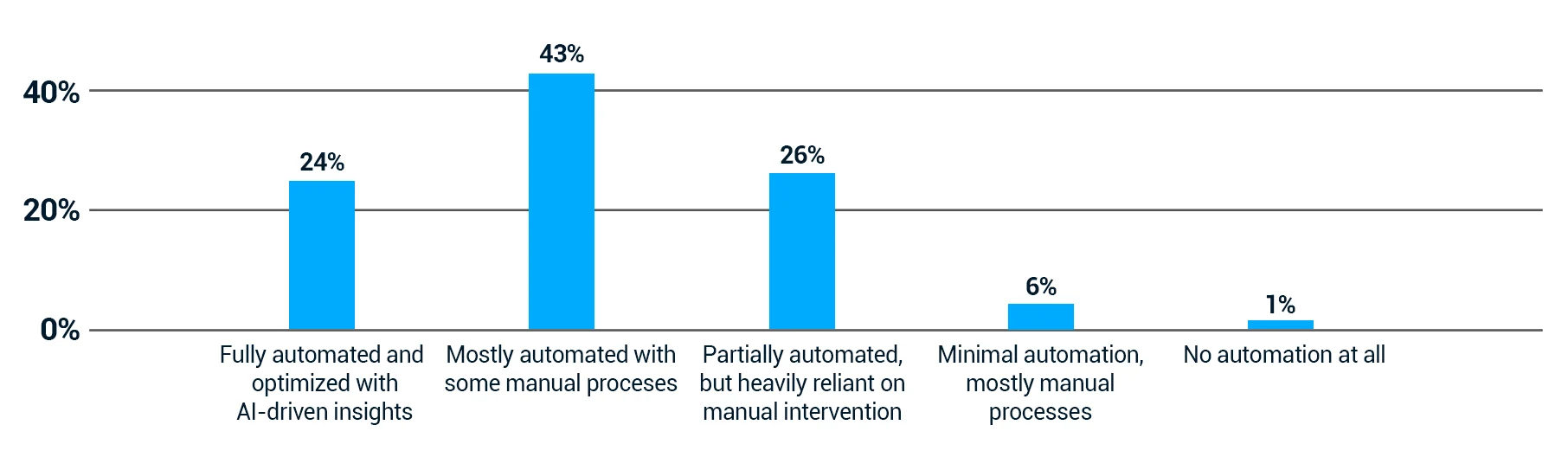
Only 24% of NA shipper transportation teams are fully automated, while one-third remain heavily or mostly manual. This stark reality means many shippers still spend excessive time on phone calls, emails, and spreadsheets.
Current State of Automation and AI Maturity
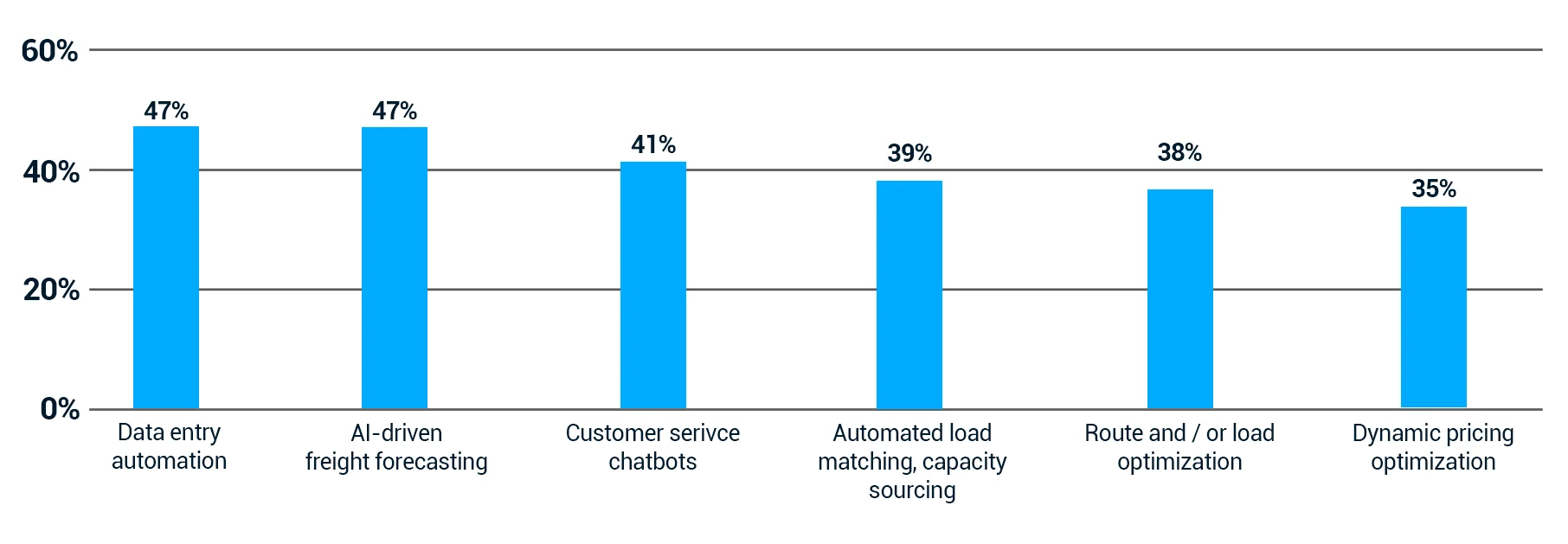
Generative AI is widespread but utilization is shallow. An overwhelming 97% of NA shipper respondents are using generative AI in some transportation function, with top use cases in data entry (47%), freight forecasting (47%), and customer service chatbots (41%) rounding out the top three categories.
Use Cases of Generative AI in Transportation Management
However, usage is not widespread across functions. 44% of all respondents that use generative AI use it in more than three areas, after which the usage rate drops steeply.
Number of Generative AI Applications Across Workflows
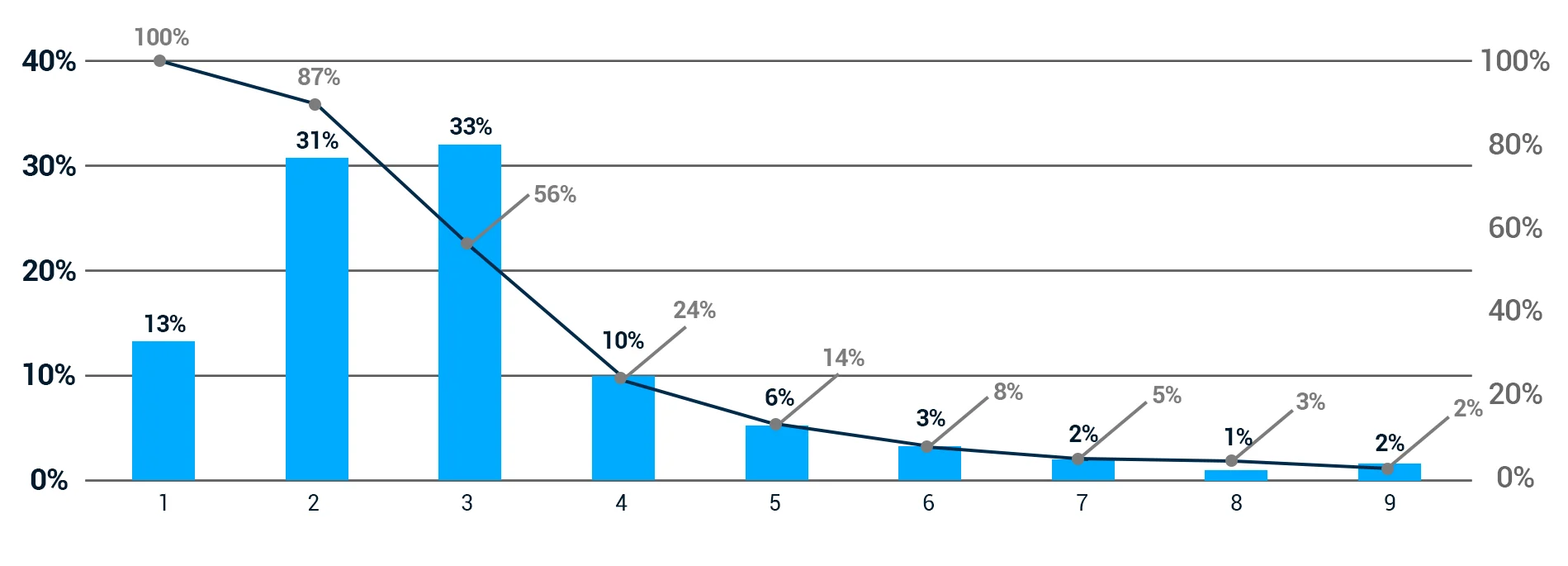
Data rebased to exclude responses of zero AI utilization
Most shippers are just scratching the surface, using AI for single tasks like converting emails to load data or for basic chatbot queries. The crucial next step is to leverage automation and AI solutions across multiple, interconnected workflows.
Implementing AI-Driven Workflow Automation
Operationalizing automation and AI means embedding capabilities directly into transportation workflows so they drive execution, not just insight. Strategic implementation of generative and agentic AI can maximize end-to-end supply chain visibility and efficiency.
For global shippers operating complex, multi-party supply chains, AI effectiveness depends on something far more foundational than algorithms: a highly connected logistics network that captures billions of real-world transactions, exceptions, and outcomes across carriers, forwarders, customs agencies, and trading partners. Connected logistics ecosystems like the Descartes Global Logistics Network are becoming the fuel source for AI productivity — and how enterprise supply chains can move from “data visibility” to “trusted autonomy.”
To start, identify high-friction manual tasks (e.g., load tendering, check calls, dock scheduling) and prioritize them for transportation management system (TMS)-driven automation to boost productivity. As automated processes become proven and repeatable, expand AI’s role by exploring ways it can be utilized for dynamic applications, including load planning, compliance management, and pricing negotiations.
As you test, implement, and expand—connectivity is the top priority. Wherever generative AI is applied, shippers should ensure that AI tools are layered into the TMS and supporting systems to augment current workflows, so they seamlessly improve daily operations without adding processes.
This is where solutions like Descartes MacroPoint™ OpsForce comes into play. OpsForce uses exception-driven agentic AI to automate critical transportation tasks—stepping in only when something breaks or falls out of compliance—so you stay in control while manual work is removed. Fully integrated into Descartes MacroPoint and your TMS, these agents improve tracking compliance, data capture, and execution without adding noise, systems, or headcount.
The data is clear: while automation and AI adoption are widespread, their impact remains limited without a deeper, more connected network. For shippers, closing this gap is essential to sustaining performance and competitiveness.